You can probably guess what giggle water is — but what about lunting? Here are some old words we don’t use,

and you probably haven’t heard of some of them. But they are fun, and maybe we should start using them again!
Apricity – The beautiful, comforting warmth of the sun during the winter. Originates from the Latin word apricitas, meaning “basking warmth” or “sunny spot.” Dates back to the 1600s.
Beef-witted – This 1590’s word refers to something stupid. Obviously.
Crapulous –Feeling ill or hungover because you ate or drank way too much. Dates back to the 1530s and is unrelated to crap. Originates from the Latin adjective crāpulōsus, which traces back to the Latin noun crāpula (intoxication) and further back to the ancient Greek word kraipálē, meaning a drunken headache or hangover.
Cockalorum – From the 1710s, this word refers to a little man who has a high opinion of himself. From cock, the word for a rooster, symbolizing swagger, strutting pride, and crowing. Its origins are also linked to an obsolete Flemish or Dutch dialect word, kockeloeren, which mimics the sound of a rooster.
Elflock – If you have wavy hair and you wake up with it tangled and mangled, that’s elflock, as though the elves
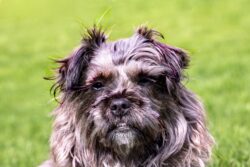
have tied it into knots during the night. First used in 1596 and rarely used in the plural.
Excogigate – To plot, plan, or devise, with Latin roots that mean to bring out by thinking. Derived from the Latin root cogitare (to think) combined with the prefix ex- (out), literally translating to “think out.”
Callipygian – Hello, Beyonce and J Lo! It was used in the 1640s and means to have a beautifully shaped butt. The word is formed from the Greek kalli– (beautiful) and pygé (rump or buttocks).
Houppelande – It means “cloak” and was used in the medieval days. It was a voluminous, flowing outer garment worn by European men and women in the late 14th and 15th centuries. I hear you can get them online in case you are going to a historical reenactment or Renaissance Fair.
Lunting – Archaic Scottish word that means going for a relaxing walk while smoking a pipe. Derived from the Scottish noun lunt (meaning a match, fuse, or smoke). Famously used by Scottish poet Robert Burns in 1786.
Jollux - Slang from the 1780s referring to a fat person. The root of the word is the adjective jolly, which entered Middle English via Old French. Related to regional dialect terms words jollus and jollous, which were used in British English to describe someone who was jolly-looking or fat.
Giggle Water – Obviously slang for alcohol. Used in America in the 1920s.
Gruttling – Old English word for a weird noise that can’t be explained. First used in the late 1500s, it is a blending of the words grunt and rattling.
Copper-clawing – This term was born around 1820 and was used to describe a girl fight. Victorian era slang thought to have originated from the phrase cap-a-clawing, which referred to tearing off another person’s cap in a scuffle.
Lethophobia – The irrational fear of oblivion, forgetting, or being forgotten. The term combines the Greek word lethe (forgetfulness or oblivion) and phobos (fear).
Ultracrepidarian – Someone who constantly gives opinions and advice on topics they know absolutely nothing about. Etymology dates all the way back to ancient Greece. It stems from the Latin phrase ne supra crepidam sutor judicaret, which translates to “let the cobbler not judge above the sandal.”
Snoutfair – An old-fashioned term for an exceptionally good-looking or handsome person. Archaic English term dating back to at least 1530. Derived by combining snout (formerly used to describe a person’s entire face) and fair.
Twirlblast – An 18th-century word for a sudden tornado or whirlwind. It combines the spinning motion of a “twirl” with the destructive force of a “blast.” It has been largely replaced by tornado.
Overmorrow: Simply means “the day after tomorrow.” Formed from the prefix over- and the Old English word morrow (morning/tomorrow), it was commonly used in the 16th and 17th centuries.
Pismire – Defined as an ant. Coined in the 14th century, the term originates from Middle English (pissemyre). It is a combination of iss (the urine-like, pungent odor of formic acid discharged by anthills) and mire (an obsolete Scandinavian and Middle English word for ant).
Sluberdegullion – In the 1600s you’d be known as someone who is lazy and slovenly. It can also describe someone who is a slobberer or chronically drunk. Emerged in the early 1610s, combining slubber (meaning to act carelessly) with an invented or dialect-based suffix (like cullion) intended to sound comical yet harsh. Used by the English poet Samuel Butler in his 1663 satirical poem Hudibras,
Twattle – To gossip. First used in 1782. Probably a variation of English dialect twattle. Used as either a noun or a verb.
Shackbaggerly –“Disorderly” or “messy. From old British regional dialects, primarily in the British Midlands, Lincolnshire, and Sussex.
Zenzizenzizenzic – Means to the power of eight. Coined by Welsh mathematician Robert Recorde in 1557, it was used before the invention of modern superscript exponents. Zenzic refers to a squared number. Zenzizenzic refers to the square of a square (the fourth power, x⁴). Zenzizenzizenzic refers to the square of the square of a square (the eighth power, x⁸).
That’s 25, but I have to add this one!!!!
Uglyography – Many doctors are said to suffer from this affliction: From the 19th century it is the word for the unfortunate combination of poor spelling and bad handwriting.

Leave a Reply